
Local government region Interview
"Humanitude Community Leader" Vol. 2: Yoshiko Matsunaga, who spreads "care techniques that convey kindness"
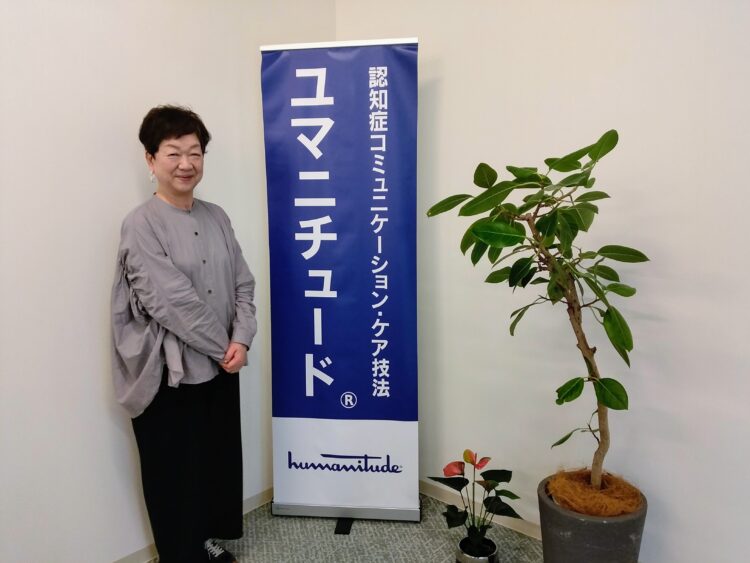
Following on from Vol. 1, this time we spoke with Ms. Matsunaga, a second-generation community leader who is dedicated to spreading Humanitude in Fukuoka City, about her encounter with Humanitude based on her own caregiving experience, and her passionate feelings about her activities in the community.
Even though you understand it intellectually, caring for family members is difficult.
Ms. Matsunaga has experience as a teacher in the nursing care department of a vocational school, while also caring for her mother-in-law, who has Alzheimer's disease, since she was about 37 years old. She commutes by train for two hours each way to visit her mother-in-law's home in between work. In the early stages of Alzheimer's disease, it is possible to have everyday conversations, so other family members often do not accept it, and she had to manage everything on her own without the support of those around her. She went through a very difficult time, even changing jobs to balance work and caregiving.
(Matsunaga-san)
"At the time, I was teaching dementia to students in class, so I knew intellectually what the right approach was. But even though I spoke kindly, I felt self-loathing because inside I was thinking, 'This is annoying,' and 'Please, no more.' I would cry on the train home. Things might have been different back then, when I was struggling with caregiving, if I had understood the principles of Humanitude."
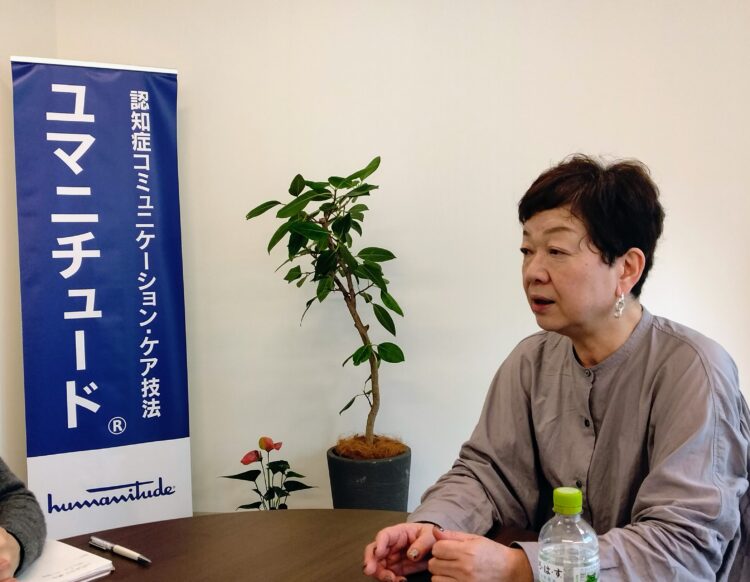
Ms. Matsunaga first learned Humanitude when she saw it mentioned in a textbook during her time as a teacher. She didn't understand what it meant after reading just a few lines of text, so she decided to take a Humanitude course.
Communicating Humanitude as a "technique"
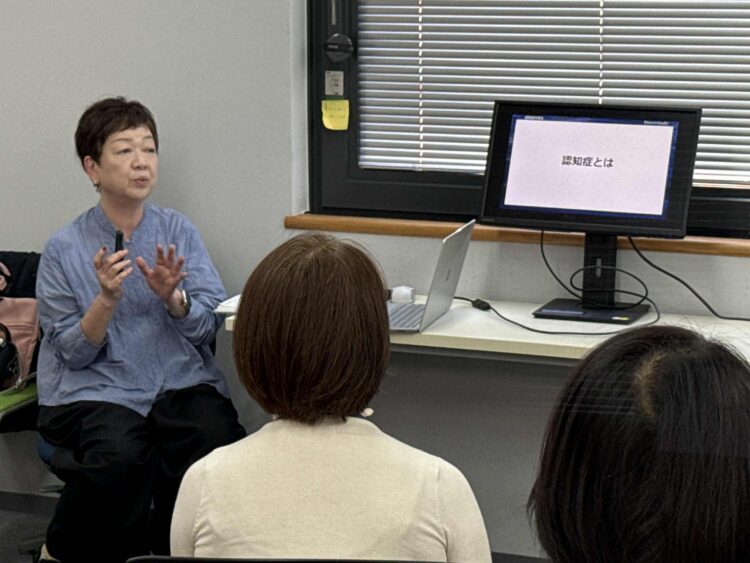
Having already built a career as a teacher of elderly care and welfare, we asked her what she felt when she encountered Humanitude.
(Matsunaga-san)
" Humanitude is a fundamental aspect of interacting with people; it's not something special, but it's difficult to convey. I believe Humanitude is what systematizes and gives form to that difficulty. As a professional, I think it's important to acquire the skills to properly communicate if there's a way to do so effectively, and then pass those skills on to others."
"When I first started working as Humanitude regional leader, I encountered some opinions at a certain facility that said, 'Why bother doing something like this? Isn't this just common sense?' But now I've really seen a shift in perspective, with people saying, 'As a professional, it's definitely necessary.'"
Caregiving is a job that relies on relationships with others. That's why they believe it's important for professionals to acquire communication skills, including eye contact and facial expressions, so that kindness is conveyed to the person they are caring for.
Things I value in my activities
I asked about the important things to consider when conducting workshops at elementary and junior high schools, companies, community centers, and other similar venues.
(Matsunaga-san)
"It's not necessary for them to understand everything; my first goal is simply for them to become familiar with Humanitude. And I hope that I can give them at least one realization that makes them think, 'Oh, I see.'"
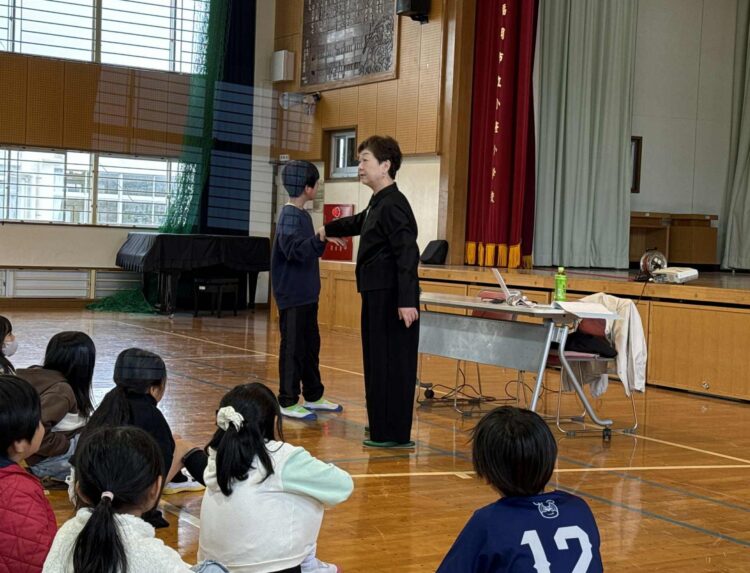
"Elementary school students and others respond well to the workshops, and I'm happy when they go home and talk about it with their families. I hope that elementary and junior high school students will be the starting point for working parents and those who will soon face the challenge of caring for elderly parents to learn about Humanitude."
A town where everyone can convey kindness
Finally, Ms. Matsunaga says she wants "everyone" to take Humanitude course.
(Matsunaga-san)
"We conduct Humanitude workshops as a technique for conveying kindness to people with dementia. It's about communicating to them in a way they understand, 'I care about you,' so I want everyone in the town to know about it. If everyone knows about it, puts it into practice, and it becomes ingrained in them without them even thinking about it, I think we can create a wonderful town where everyone can convey kindness."