
Local government region Interview
"Humanitude Regional Leader" Vol. 3: Spreading the "Caregiving Technique of Conveying Kindness" - Mika Takamori
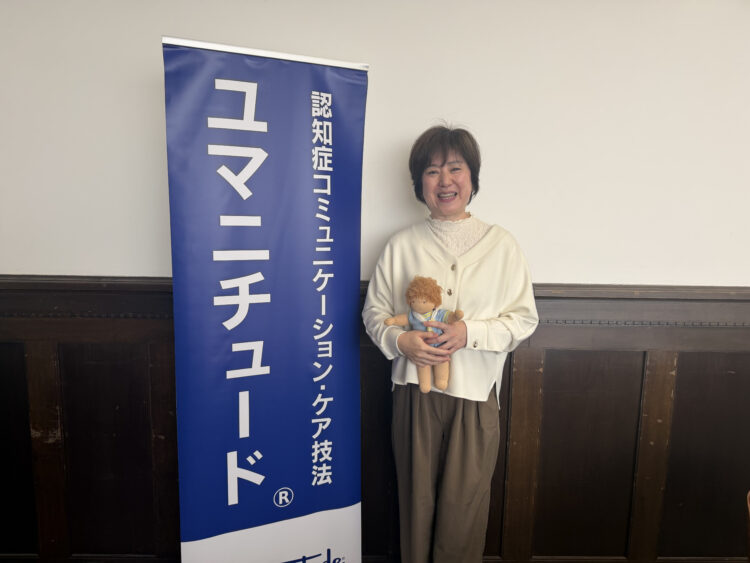
This time, we interviewed Ms. Takamori, a first-generation community leader who has become an independent care manager in Fukuoka City and has been instrumental in establishing dementia patient meetings, about her thoughts on her activities.
My encounter with Humanitude was a "natural progression."
Ms. Takamori, who needed to care for four family members, including her grandmother with dementia, became an independent care manager to balance work and caregiving. Her encounter with Humanitude began with Fukuoka City Dementia Life Support Worker Training Program.
After taking this training course, which cultivates individuals who can play an active role in the community as good companions for people with dementia, shewas told about the "Humanitude Community Leader Training" course, and naturally decided to take it. She said sheparticipated with the feeling that she wanted to "incorporate anything that would be beneficial for caregiving."
However, she says that this is how she felt when she first started learning about Humanitude.
(Takamori-san)
"At first, I thought, 'This is such a basic thing,' or 'All healthcare professionals do this.' But when I looked around more closely, I realized there are people who can't do it because of their personality, or who are not good at it. There are also people who say they can't do that for their family. I realized that there is meaning in learning this as a 'skill' that even those people can put into practice."
Towards a technology that is "commonplace" and accessible to everyone.
That realization forms the core of Ms. Takamori's work. Kindness and careful care cannot always be conveyed through "intention" alone.Ms. Takamori believes that there is meaning in spreading the techniques of Humanitude, such as how to make eye contact, how to touch, and how to speak, as something that can be properly "learned."
And apparently, that feeling was further strengthened by an incident that occurred at a certain facility.
When Ms. Takamori accompanied a care manager to the initial interview with a resident of a care facility, the facility staff told her, "They're bedridden and we can't get any information from them." However, Ms. Takamori stillwanted to confirm the resident's wishes, so she held their hand and spoke to them while looking them in the eyes. When she asked, "Shall we go home together?", the resident 's eyes widened in response.
(Takamori-san)
"At that time, I strongly felt that Humanitude was necessary. I realized that if things continued as they were, the person's feelings would be disregarded and things would just stay the same. I also realized that even facility staff and caregivers sometimes fail to communicate in ways that they take for granted."
Furthermore, the desire to share this information not only with professionals but with everyone is what motivates Ms. Takamori to act as a community leader.
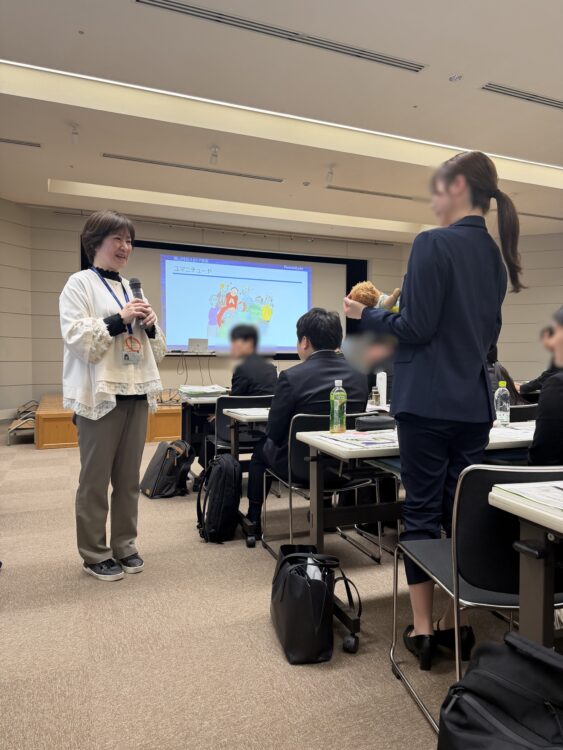
Holding the doll, searching for words to convey
Dolls always make an appearance in Ms. Takamori's workshops. Her unique style of carefully conveying the techniques of Humanitude using dolls is truly her own.
On the other hand, he says there are difficulties in communicating this message.
(Takamori-san)
"I'm always thinking about how to communicate effectively. Rather than just wanting people to listen, I want them to feel like it's happening to them personally. To achieve that, I try to include as many concrete examples as possible."
Takamori calmly explains that there are moments when he feels his efforts have borne fruit.
(Takamori-san)
"At elementary school workshops, the children sometimes say, 'I'm going to try this with my grandma next time!' And at community centers, women who are caring for their husbands sometimes say, 'I'm so glad I got to hear your talk today.' I also sometimes hear people say, 'I wish I had heard this sooner.'"
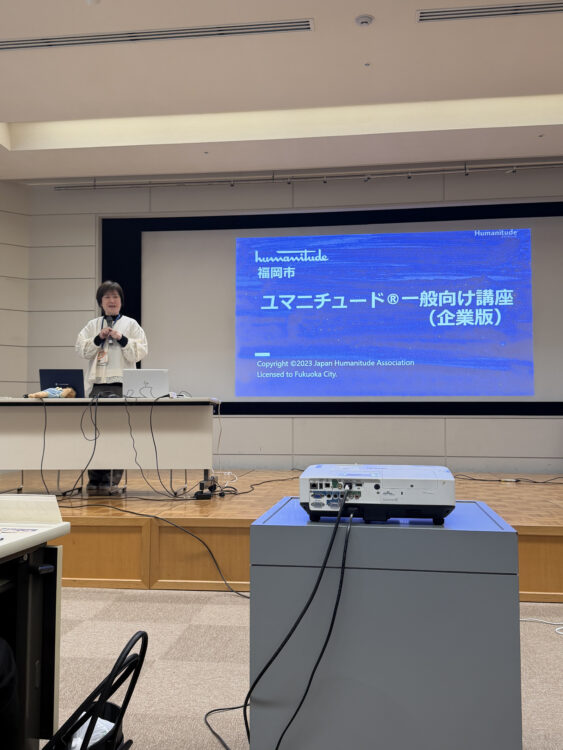
I want to create many places nearby where people with dementia can drop by.
Among her many activities, Ms. Takamori is currently focusing on increasing the number of "dementia patient meetings" in the community, where people diagnosed with dementia can gather and talk freely.
Takamori says that she wants families and professionals who hesitate to participate in meetings with people with dementia due to the misconception that they cannot communicate because they have dementia to understand the importance of these meetings.
(Takamori-san)
"These meetings for people with dementia are not just for discussion; they are a precious time and place for people with dementia to regain their strength, connect with others, and feel a sense of dignity. We want many people to know this.By meeting people who share the same struggles, feelings that are usually difficult to express can naturally come out and be conveyed in a subtle way."
For example, when someone with aphasia tries their best to speak, those around them listen with warmth and understanding. As a result, they use more words than they would at home, and sometimes even utter words that family members or care managers might not be able to elicit. Participants leave feeling that they "had a good time" and have regained their sense of self-worth, simply because they were listened to.
Furthermore, the meeting with the patient also provides an opportunity for accompanying family members to talk to each other.
(Takamori-san)
"I know firsthand that the family members closest to you are the ones who go through the hardest times, so I make it a point to give my family time to themselves and to share their stories."
The emotions and misunderstandings that arise precisely because they are family.
Takamori plays the role of acting as a bridge between people with dementia and their families, carefully unraveling these issues.
As a care manager, a community leader Humanitude, and a woman who has continuously supported families—why not take a course taught by Ms. Takamori, who has been involved in so many activities?