
Signature groups Interview
A "network of bonds" spreads across France, the birthplace of Humanitude—IGM France
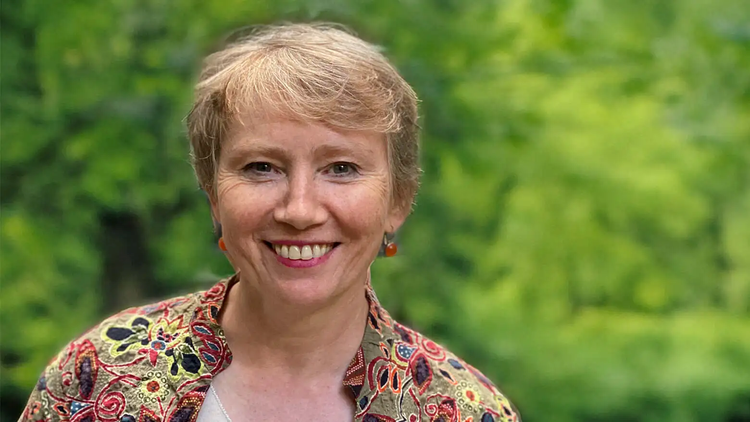
Annie de Vivie, who kindly cooperated with the interview.
Source: agevillage.com, a website for seniors and caregivers.
(https://www.agevillage.com/actualites/edito-ete-regarder-capacites-vieilles-personnes-et-pas-seulement-leurs-pertes)
This is the third installment of our interviews with organizations that have signed the "Humanitude Sans Frontières Charter." This time, we spoke with Annie de Vivie Managing Director of IGM France (hereinafter referred to as "Annie").
IGM France, the birthplace of Humanitude, is leading the way in its dissemination efforts. We delve into the background of their initiatives and the thoughts behind their work.
About IGM France
IGM France (Institut Gineste Marescotti France) is an organization responsible for promoting the adoption of Humanitude in France, the program’s country of origin. Under license from “SAS Humanitude,” which holds the intellectual property rights to Humanitude, the institute supports the program’s expansion throughout France and assists with its implementation in medical and long-term care facilities.
Currently, there are 12 IGM locations in France, and Ms. Annie oversees all of them as Managing Director. Furthermore, there are approximately 800 facilities that have adopted Humanitude, and 38 of them have obtained Humanitude certification.
Multifaceted outreach activities to pave the way for the future of care
IGM France conducts outreach activities four to five times a year through events and training sessions.
One of the most representative initiatives is the "Non-Pharmacological Therapy Conference (Colloque Approches Non-Médicamenteuses)," held every November. This conference, which has been running since 2008, brings together many facility managers and medical and nursing professionals to share practical knowledge and examples of non-pharmacological care rooted in real-world situations.
Therefore, what we value most is having managers of facilities that have actually implemented Humanitude in the field and obtained certification speak at our events.
Managers of certified facilities are the best "ambassadors" for conveying the value of Humanitude. By sharing the results and challenges of their practice in their own words, based on their experiences, they convey the wonderfulness of Humanitude.
In addition, Annie founded the website "agevillage.com" for seniors and caregivers in 2000. She continues to write articles and disseminate information, and is also actively involved in awareness-raising activities through the media.
Childhood memories—the origins and convictions nurtured in the caregiving field
My initial attraction to Humanitude stems from childhood memories.
Having grown up watching her mother work in a nursing home, Annie harbored the desire to "provide care more easily and comfortably."
In 2003, I first met Yves Gineste and Rosette Marescotti at an event. Initially, I only intended to listen to them speak, but I decided I wanted to see the actual practice with my own eyes, so I visited a hospital in southern France where they were providing guidance. There, I spent an entire day observing nurses and caregivers practicing Humanitude and witnessed its effectiveness firsthand.
"This technology can be learned by anyone and can solve various difficulties faced in care settings."
Annie was convinced of this.
Furthermore, around that time, Annie's mother also learned about Humanitude and reportedly said, "If I had this technology, building relationships with the many clients I've worked with so far would have been much smoother."
Driven by the conviction she gained from her own experience in the field, and encouraged by the words of her mother, who had worked in nursing homes for many years, Annie began to dedicate herself to promoting Humanitude.
The profoundness inherent in simple techniques
Humanitude technique appears very simple at first glance. However, mastering it completely is not easy. It takes time to shift one's mindset to "re-evaluate existing care practices and embrace a new approach" precisely because of the experience and pride accumulated over many years in the field.
Furthermore, many caregivers and medical professionals do not learn the principles of Humanitude during their school education or initial training. In some cases, they may have been taught care techniques that could cause anxiety in people who are confused due to dementia or other conditions. Therefore, a certain process is necessary to re-examine their daily use of their bodies and their communication habits.
IGM France conducts a four-day basic training program, but it is only through several weeks of practical application afterward that the skills truly become ingrained as natural behaviors. In particular, fundamental skills such as gaze speech touch are honed through repeated practice. Furthermore, organizational support from managers is essential for the skills to become firmly established.
On the other hand, actually witnessing changes in user responses and improvements in the quality of care motivates frontline staff to continue learning.
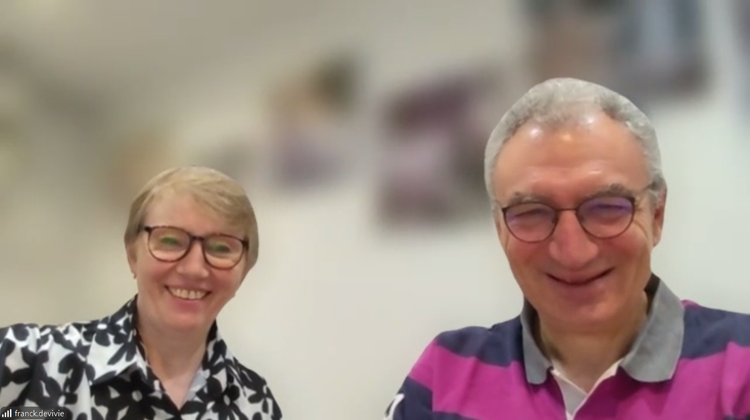
(Left) Annie, (Right) Franck Director of IGM International
The continuous process leading to certification
The biggest challenge in actual implementation is getting people to believe in the possibility that "Humanitude will change the workplace." Healthcare and nursing care settings face many difficulties, including labor shortages, time constraints, financial challenges, the impact of the COVID-19 pandemic, and rising energy costs in recent years. Under these circumstances, deciding to take on a new initiative is not easy.
That's why comprehensive support is essential for obtaining certification.
IGM France has developed a detailed roadmap for each stage of the implementation process, creating a system that allows for steady progress step by step. We place great importance on supporting facilities so that they feel, "We can do this."
The way facilities implementing Humanitude, ambassadors, and IGM are collaborating and learning from each other truly represents a "network of bonds" that is spreading throughout France.
A Vision for France as Seen Through the "Fukuoka City Model"
"Our dream is to teach Humanitude in schools, because if children learn it from a young age, it will become a natural habit," Annie says.
He also highly praised Fukuoka City for implementing Humanitude workshops in elementary and junior high schools, saying that the initiative is world-leading and has given him great inspiration.
He stated that going forward, he hopes to actively share various initiatives, including those in Fukuoka City from France, and further deepen the sharing of a "philosophy of care" that transcends national borders.
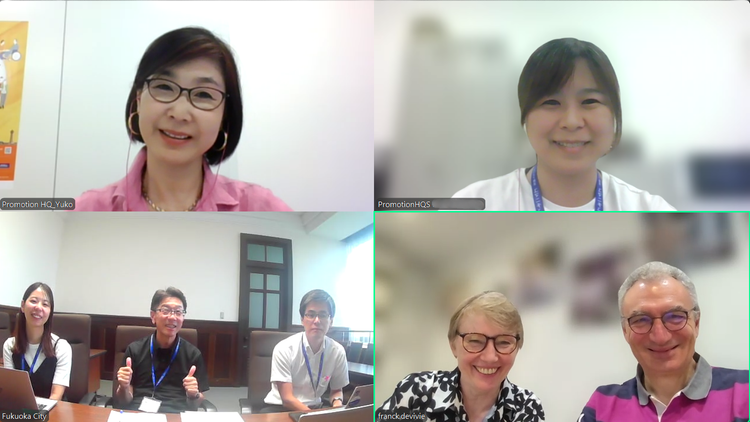
[Editor's Note]
This interview was made possible thanks to the generosity of Mr. Franck de Vivie, Director of IGM International, who was featured in the first installment of this series.
In fact, Annie and Franck are a married couple, and Franck was also present for this online interview. Seeing how they have worked together for many years to spread the principles of Humanitude, this interview made me realize that its philosophy is steadily spreading to many people.